
- Understanding Tariffs: The Foundation of Strategic Trade Planning
- Direct Economic Impacts on Business Operations
- Industry-Specific Strategic Implications
- Supply Chain Optimization: Strategic Framework
- International Trade Relationship Management
- Economic Efficiency Analysis
- Strategic Business Response Framework
- Long-term Strategic Planning
- CITTA Brokerage: Your Tariff Strategy Partner
- Strategic Outlook and Action Steps
- Optimize Your Tariff Strategy Today
Today’s volatile trade environment demands that business leaders understand how tariffs reshape economic landscapes and drive strategic business decisions. Through years of advising companies on trade policy implications, the evidence is clear: businesses that understand these mechanisms can protect their operations and capitalize on emerging opportunities.
Understanding Tariffs: The Foundation of Strategic Trade Planning
Tariffs are government-imposed taxes on imported goods that fundamentally alter competitive dynamics. When analyzing tariff structures, focus on their dual function: they generate revenue while protecting domestic industries from foreign competition.
Consider this scenario: a steel tariff increases foreign steel costs by 25%, immediately shifting competitive advantage toward domestic producers. However, the economic ripple effects extend far beyond the targeted sector, creating opportunities and challenges across industries.
Direct Economic Impacts on Business Operations
Price Dynamics and Procurement Strategy
Tariffs create immediate cost pressures throughout supply chains. Manufacturing companies regularly face input cost increases, requiring strategic decisions about cost absorption versus price pass-through to maintain market position.
For B2B operations, proactive procurement strategies are essential. Companies should develop supplier diversification programs that reduce tariff exposure while maintaining quality standards. The focus should be on quantifiable risk mitigation rather than reactive cost management.
Revenue Generation vs. Economic Efficiency
While tariffs generate government revenue, broader economic costs typically exceed these benefits. Research from the Penn Wharton Budget Model and other economic analyses show that while tariffs raise revenue, associated economic inefficiencies and output losses often exceed the revenue collected, with efficiency losses sometimes more than doubling revenue gains.
Industry-Specific Strategic Implications
Manufacturing Sector
Import-dependent manufacturers often face margin pressure from tariffs, while some domestic producers may gain market share. For example, a component manufacturer confronted with tariff-induced cost increases might pursue supplier diversification and vertical integration to improve competitiveness despite initial cost challenges.
Case study: A beauty brand hit with combined 25% Section 301 tariffs and additional packaging-related duties saw input costs spike but had no drawback program in place. By implementing a structured duty drawback strategy and coordinating documentation across nearly two dozen contract manufacturers, the company recovered $8.1M in paid duties within months and positioned itself for roughly $2M in quarterly refunds, turning tariff pressure into recurring cash flow and a competitive edge.
Technology Sector
Technology companies face complex tariff dynamics: domestic protection opportunities coexist with higher costs that can slow digital transformation across the economy. Considering total cost of ownership, including direct import costs and downstream customer spending impacts, is essential.
Technology companies should evaluate tariff impacts through a total cost of ownership lens, considering both direct import costs and downstream effects on customer spending capacity.
Supply Chain Optimization: Strategic Framework
Modern supply chains require sophisticated tariff management strategies. A proven four-pillar approach includes:
Supplier Base Diversification
Establishing multi-country sourcing strategies provides flexibility amid shifting policies. Recommended allocations vary, though some suggest aiming for a mix to balance risk (e.g., diversifying primary, secondary, and tertiary suppliers).
Domestic Supplier Development
Investing in domestic supplier relationships can build tariff-insulated supply chains. Investment payback periods vary, but some case studies report returns within one to two years.
Product Redesign Strategies
Collaborate with engineering to identify alternative materials or components reducing tariff exposure without compromising the product’s quality.
Contract Structure Optimization
Negotiate tariff adjustment clauses in supplier agreements to manage cost volatility through contracts.
International Trade Relationship Management
Tariffs rarely operate in isolation. Understanding retaliatory tariff patterns helps companies anticipate and prepare for escalating trade tensions.
Export-dependent businesses may experience notable revenue impacts. Studies estimate export value reductions on the order of 10-20% in affected sectors under retaliation scenarios. Strategic responses include expanding to new markets and enhancing value-added services.
Economic Efficiency Analysis
Quantitative analysis shows tariffs create deadweight losses averaging 0.4% of GDP in affected sectors. While specific industries benefit from protection, aggregate economic efficiency typically declines.
Strategic Business Response Framework
A proven methodology for tariff environment success includes:
- Operational Diversification
- Creating a multi-country footprint for policy adaptability.
- Duty Management Optimization
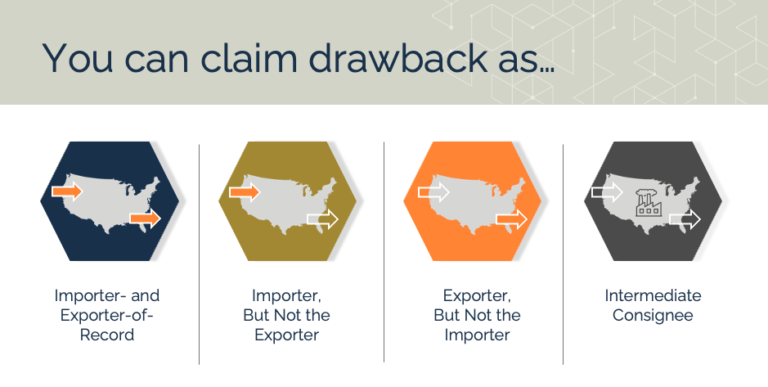
- Using customs expertise to reduce tariff expenses across multiple levers, including tariff classification reviews, origin and valuation strategies, and, where eligible, duty drawback programs that recover duties on qualifying exports. Find out if your organization is eligible for duty drawback.
- Supplier Relationship Strengthening
- Developing long-term partnerships domestically and internationally.
- Technology Investment Acceleration
- Deploying automation to offset tariff-driven cost pressures.
Long-term Strategic Planning
Long-term tariff impact analysis depends on policy duration and scope. Temporary tariffs create short-term operational adjustments, while permanent tariffs require fundamental business model restructuring.
Strategic planning should involve scenario analysis with multiple policy outcomes, ensuring companies maintain operational flexibility while making necessary long-term investments.
CITTA Brokerage: Your Tariff Strategy Partner
At CITTA Brokerage, we help businesses navigate complex tariff environments while maintaining profitability and compliance, with a specialized focus on designing and managing duty drawback programs for eligible importers and exporters.
Our tariff management services include:
- Establishing and running duty drawback programs
- Documentation review, data architecture, and recordkeeping
- Compliance with U.S. Customs for drawback and managing audits
- Mapping import/export and production flows to maximize legal duty recovery
We build financial resilience by designing, implementing, and managing compliant duty drawback programs that recover paid tariffs and taxes, helping importers and exporters unlock cash flow and sustain a competitive edge in a shifting trade environment.
Strategic Outlook and Action Steps
Based on global trade evolution analysis, continued tariff volatility requires proactive business adaptation. Companies that develop comprehensive trade strategies position themselves advantageously for various policy scenarios.
Immediate Action Items:
- Assess current tariff exposure across your supply chain
- Develop supplier diversification strategies
- Evaluate duty drawback opportunities
- Create scenario planning for various policy outcomes
Not every business will qualify for duty drawback, and for many importers it will apply only to a portion of their duty payments. Drawback is most relevant for companies that regularly export finished goods or components made from imported inputs; businesses with primarily domestic sales will often rely more heavily on strategies such as supplier diversification, tariff engineering, and careful classification and valuation reviews.
Optimize Your Tariff Strategy Today
Don’t let tariff volatility disrupt your business operations. Understanding how tariffs affect the economy and implementing strategic responses can transform challenges into competitive advantages.
Ready to optimize your tariff strategy and discover your duty drawback potential? Schedule a strategic discovery call today where we’ll analyze your specific situation and provide actionable recommendations for immediate implementation.